
Behind the Harvest: A Day at Fattoria San Michele a Torri
July 15, 2026
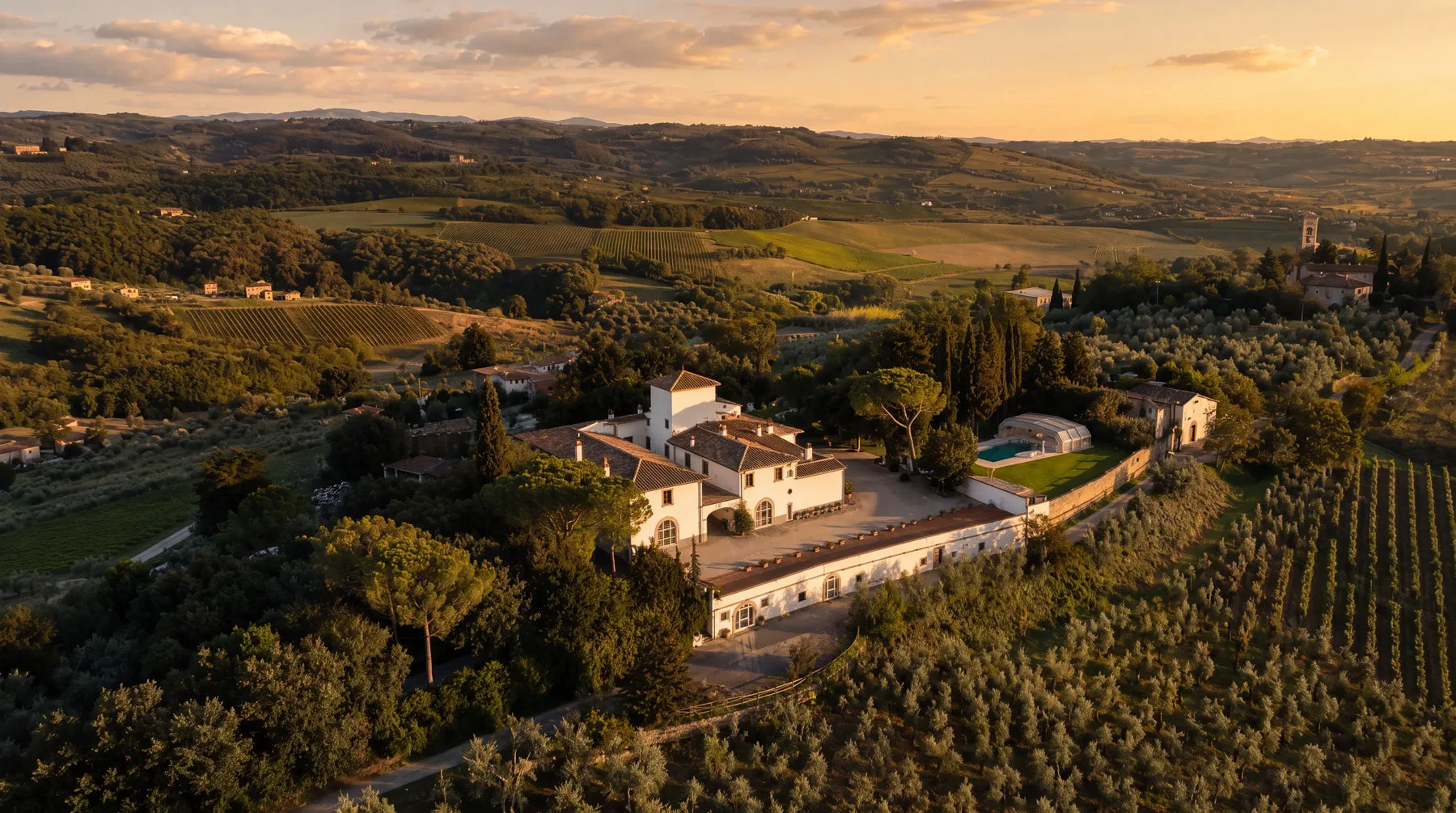
In the Chianti hills, just 15 kilometres from Florence, lies Fattoria San Michele a Torri.
Here, around 40,000 olive trees grow across the hillsides, between 150 and 300 metres above sea level.
For most of the year, life on the estate follows the rhythm of nature. But when autumn arrives, everything changes.
From late October, a few intense weeks begin with one thing at the centre of it all:
Harvesting the olives at exactly the right moment and getting them from tree to mill as quickly as possible.
This is where an exceptional olive oil begins.
It All Starts in the Olive Grove
Fattoria San Michele a Torri has around 140 hectares of olive groves, planted with classic Tuscan varieties including Frantoio, Moraiolo and Leccino, alongside Pendolino and Cerretana.
The estate has been certified organic since 1993. Here, organic farming is about more than the olive trees themselves. The landscape, soil and biodiversity surrounding the groves are treated as part of the whole.
Throughout the year, the olives develop in the Chianti hills until the short window the producer has been waiting for finally arrives.
The harvest.
A Few Weeks Can Define the Entire Result
Olives can be harvested at different stages of ripeness. Leave them on the tree for longer and the fruit develops more oil, allowing the producer to achieve greater volume.
But at San Michele a Torri, maximum volume is not the goal.
Quality is.
Harvesting usually takes place from late October to early November, when the olives have reached the stage of ripeness the producer is looking for.
Earlier harvesting means less oil from each kilogram of fruit. In return, it delivers the freshness, intensity, bitterness and pepperiness that define a truly characterful extra virgin olive oil.
It is a deliberate choice.
Less volume. More character.
From Tree to Mill Within 12 Hours
Once the olives have been harvested, the race against time begins.
The faster fresh, undamaged fruit reaches the mill, the better the conditions for preserving the quality it had on the tree.
That is why, since 2017, Fattoria San Michele a Torri has operated its own modern olive mill on the estate, equipped with a Mori TEM system designed for precise, high quality olive oil production.
It gives the producer direct control over one of the most important stages of the entire process.
The olives are processed within 12 hours of harvesting, and the fresh oil is immediately filtered. The aim is to preserve as much of its freshness, aroma and character as possible.
No long journey to an external mill.
No unnecessary waiting.
From olive grove to finished oil, on the same estate.
Then Comes the Final Selection
But even on an estate like this, not every olive oil becomes Laudemio.
Laudemio is the finest selection.
The best batches are evaluated according to the strict quality standards of the Laudemio Consortium, established in Tuscany in 1988 to protect and promote extra virgin olive oil of exceptional quality.
Only when the oil meets the required standards and passes the sensory evaluation can it carry the Laudemio name and be bottled in its distinctive octagonal bottle.
That is why Laudemio is more than simply the name of an olive oil.
It is the result of a selection.
One Estate. One Harvest. Complete Control.
When you open a bottle of Laudemio from Fattoria San Michele a Torri, the olive oil can be traced back to one place.
The olives are grown on the estate’s own land, harvested in the Chianti hills, processed in the estate’s own mill and selected according to strict quality standards.
No anonymous blend of oils from different producers.
No unknown origin.
Just olives, one estate and an uncompromising focus on quality.
From the Chianti Hills to Your Table
It takes only a few seconds to drizzle Laudemio over burrata, freshly baked bread, pasta, fish or grilled vegetables.
But the olive oil in the bottle is the result of an entire year in the grove, a few decisive weeks of harvesting and a process where the time between tree and mill matters.
That is the journey you taste in every bottle.
From one estate outside Florence, all the way to your table.