

Health & Longevity

The Mediterranean way of life.

Thousands of years of tradition. Decades of modern research. Rich in monounsaturated fats and naturally occurring plant compounds, extra virgin olive oil represents something remarkably simple: real food, minimally processed, rooted in nature.

Discover what makes extra virgin different →
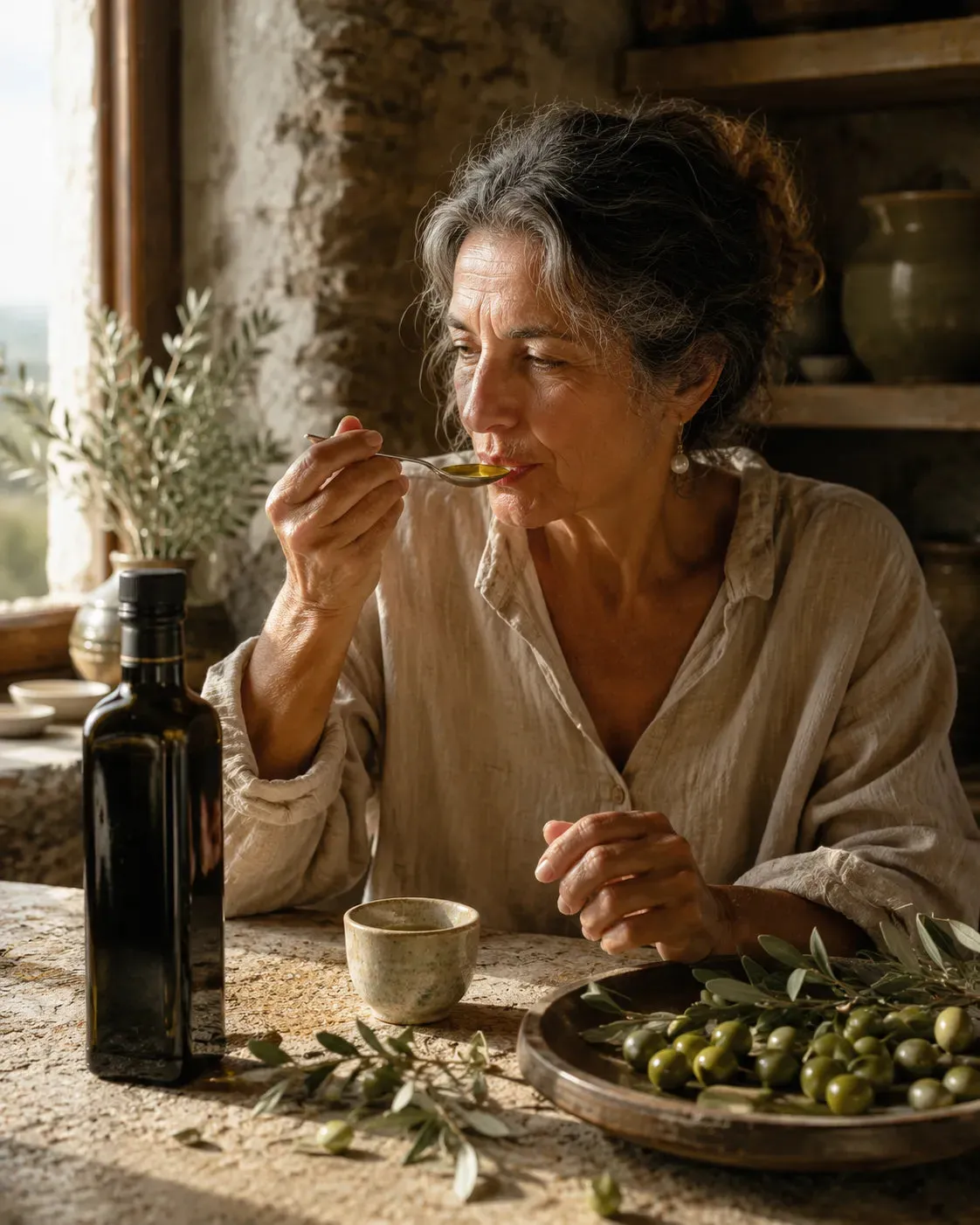
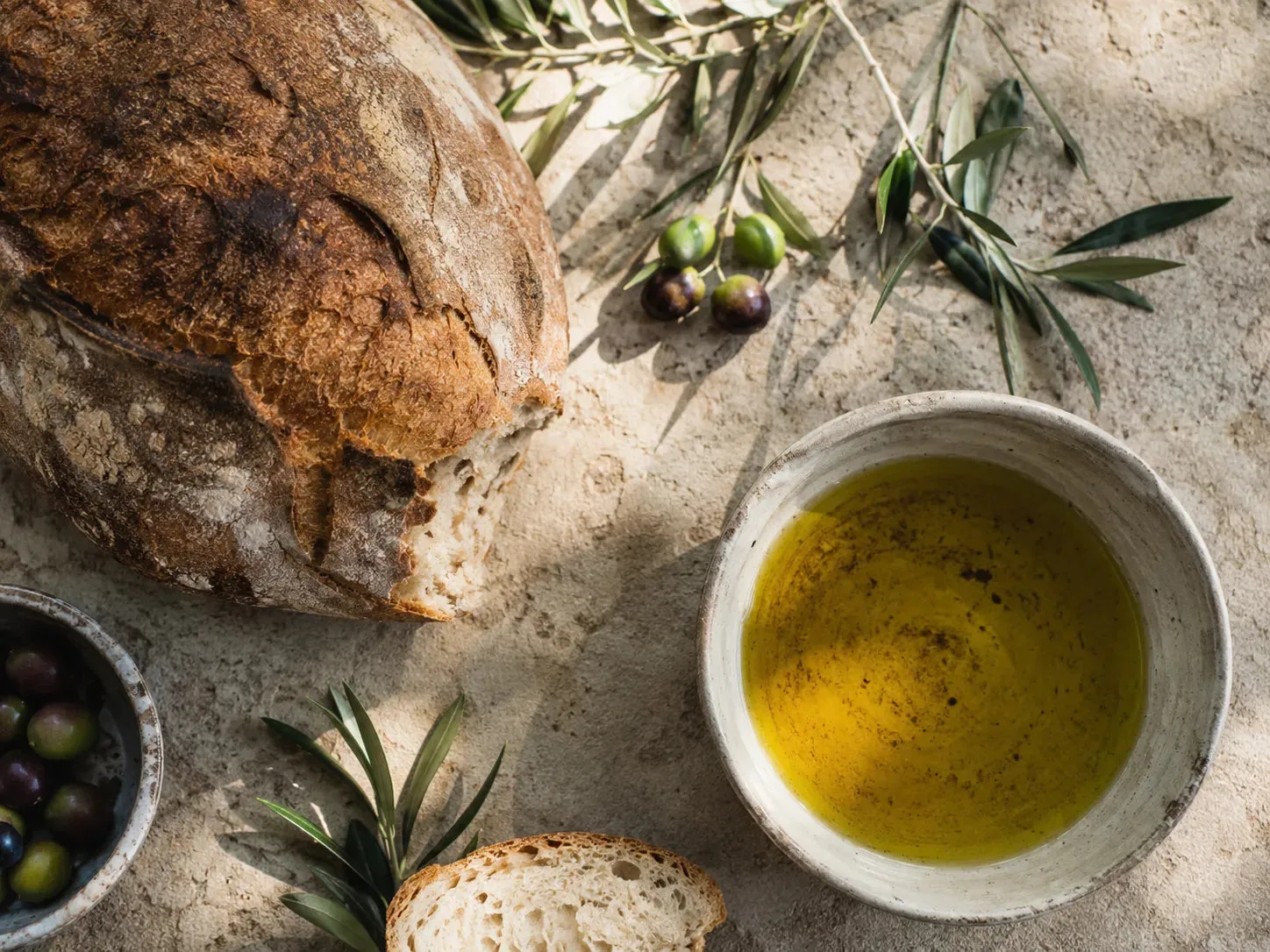
Bread, olives and olive oil on a table
Food

Simple, natural ingredients. Olive oil at the heart of everyday meals.

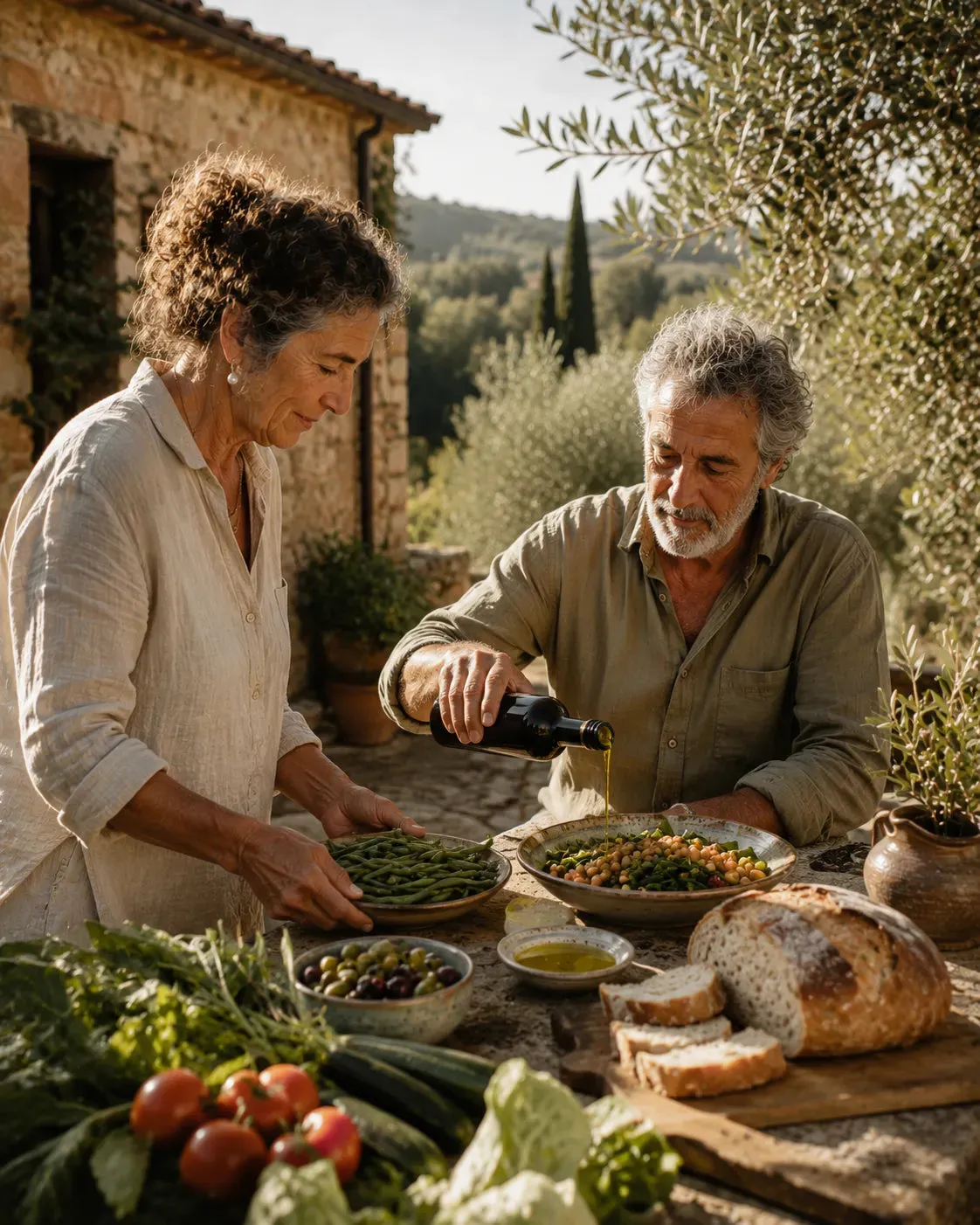
Friends sharing a meal outdoors in Tuscany
Culture

Shared traditions, hospitality and a sense of community.

Tuscan hills with olive trees at sunset
Longevity

A balanced way of living that supports wellbeing for the long term.

But is it that simple?

Not all olive oil is created equal.

↓
02 · Know your olive oil

Not all olive oil is created equal.

Same fruit. Very different oils.

Not everything labelled “olive oil” is the same. From mechanical extraction to refining, different production methods create fundamentally different categories of olive oil, with differences in flavour, quality and naturally occurring compounds.

So what’s actually in the bottle?

1

Extra virgin olive oil

The highest official quality category

  • Mechanical extraction only
  • Never refined
  • High polyphenol content (>200 mg/kg)
  • Free acidity ≤ 0.8%
  • No sensory defects permitted
  • Fruity, often bitter and peppery

Pure fruit.
Powerful nutrition.

2

Virgin olive oil

Mechanically extracted, but a lower quality category

  • Mechanical extraction
  • Never refined
  • Free acidity ≤ 2.0%
  • Sensory defects may be present
  • Natural composition varies

Still natural.
Less exceptional.

3

Olive oil

Refined olive oil blended with virgin olive oil

  • Undergoes refining
  • Blended with virgin olive oil
  • Mild, more neutral character
  • Different from extra virgin olive oil

Processed and refined.
Stripped back.

4

Olive pomace oil

Produced from the remaining olive material

  • Further extracted and refined
  • From olive pomace (remaining material)
  • Different production process
  • Fundamentally different from EVOO

Biologically empty.
Only fat.

“Extra virgin” is not a marketing term.
It is a quality classification.

Yet not all extra virgin olive oil is equal either.

Two bottles can both legally be called extra virgin, yet differ significantly in freshness, harvest timing, polyphenol content, acidity, processing and storage.

HarvestWhen and how the olives are picked
TimeFrom harvest to extraction
PolyphenolsNaturally occurring plant compounds
AcidityLower acidity indicates quality
StorageProtection from light, heat and oxygen
One of the differences lies in what you can’t see

Discover the power of polyphenols.

03 · The hidden power

Small compounds. A remarkable part of the olive.

Extra virgin olive oil is known for its healthy monounsaturated fats.

But within high-quality EVOO lies something less visible: a complex family of naturally occurring plant compounds called:

Polyphenols

Created naturally by the olive tree as part of its own defence system, polyphenols are remarkable plant compounds found in quality extra virgin olive oil.

Remove the polyphenols, and olive oil becomes just fat.

  • Natural defence: Powerful antioxidants that protect the body’s cells.
  • Character & flavour: Gives the typical fresh bitterness and the pleasant peppery “kick” in the throat.
  • Oxidative stability: Protects the oil itself from oxidation and keeps it fresh for longer.
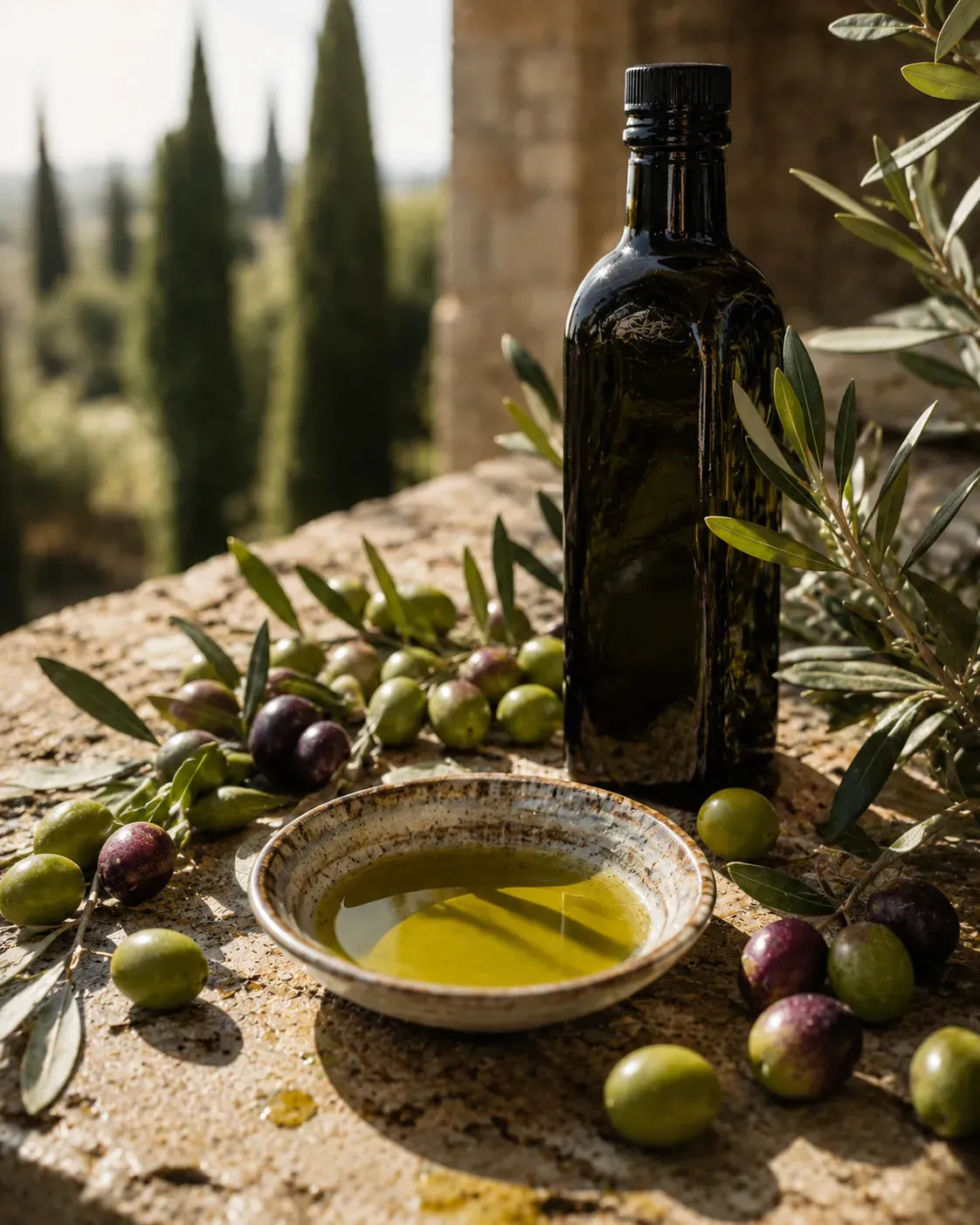
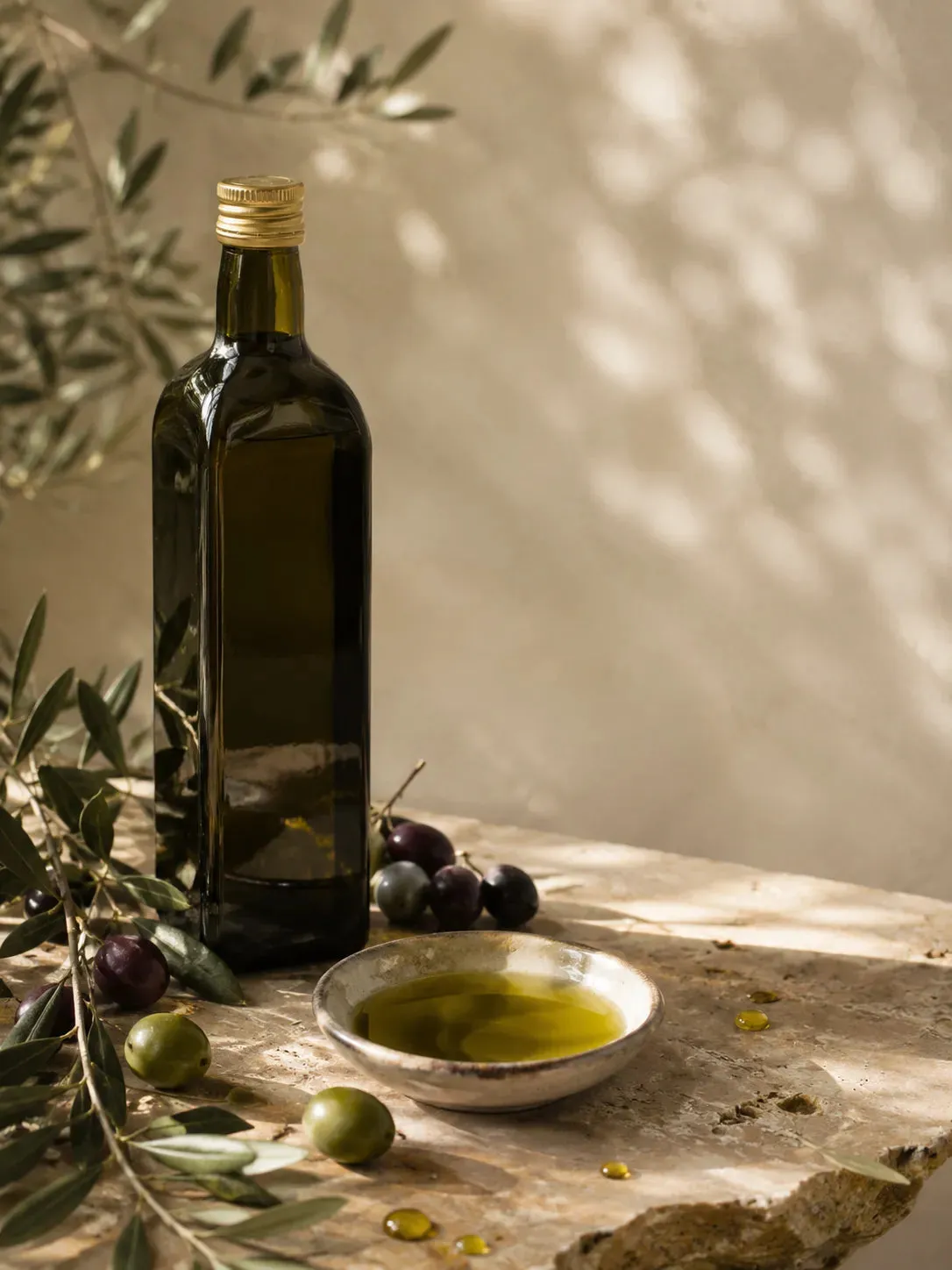
A bottle of olive oil beside a bowl of oil and olives

Does every extra virgin olive oil have the same amount?

Far from it.

Polyphenol levels can vary significantly from one extra virgin olive oil to another. A number of factors can influence how much is present, and how well it is preserved.

Olive variety · Harvesting · Production · Storage · Freshness

But “polyphenols” are not one single thing. They are a family of fascinating natural compounds.

Meet the molecules inside the olive.

Oleocanthal · Oleacein · Hydroxytyrosol · Tyrosol · Oleuropein

Discover what’s inside ↓
04 · Inside the olive

Meet the remarkable compounds within extra virgin olive oil.

Polyphenols are not one single compound. They are a diverse family of naturally occurring plant compounds, each with its own structure, characteristics and role in the complex chemistry of extra virgin olive oil. Meet some of the molecules behind the science.

Oleocanthal

The peppery one.

Oleocanthal is a naturally occurring phenolic compound closely associated with the distinctive peppery sensation that high-quality extra virgin olive oil can produce at the back of the throat. That familiar little "kick"? Oleocanthal may be one of the reasons.

PEPPERY · BIOACTIVE · WIDELY STUDIED

+ Discover more

Why it matters. Oleocanthal has attracted significant scientific interest because of its unique biological properties and its interaction with pathways involved in the body's inflammatory response.

Studied for

Inflammatory pathways. Research has explored how oleocanthal interacts with biological pathways associated with inflammation.

Healthy aging. Emerging research is investigating its potential role in cellular health and processes associated with healthy aging.

Antioxidant activity. Oleocanthal forms part of the wider family of bioactive phenolic compounds contributing to EVOO's natural antioxidant profile.

The taste connection. That peppery sensation at the back of your throat isn't necessarily a flaw. In fresh, high-quality EVOO, pungency can be associated with the presence of phenolic compounds such as oleocanthal.

Oleacein

A powerful part of EVOO's phenolic profile.

Oleacein is one of the prominent naturally occurring phenolic compounds found in extra virgin olive oil. Known for its antioxidant properties, it forms part of the complex natural chemistry that helps distinguish high-quality EVOO.

ANTIOXIDANT · BIOACTIVE · NATURALLY OCCURRING

+ Discover more

Why it matters. Oleacein has attracted growing scientific interest for its antioxidant properties and potential biological activity.

Studied for

Oxidative stress. Research has investigated oleacein's antioxidant activity and its interaction with processes associated with oxidative stress.

Cardiovascular health. Oleacein is being studied as part of broader research into olive phenols and cardiovascular health.

Cellular protection. Its antioxidant properties have made it an interesting compound in research exploring the protection of cells from oxidative damage.

Part of the bigger picture. Oleacein does not exist in isolation. It works alongside a complex family of phenolic compounds that together form the distinctive bioactive profile of extra virgin olive oil.

Hydroxytyrosol

Small molecule. Serious scientific interest.

Hydroxytyrosol is one of the most extensively studied phenolic compounds associated with olives and olive oil. Known for its powerful antioxidant properties, it has become an important focus of olive polyphenol research.

ANTIOXIDANT · CELL PROTECTION · WIDELY STUDIED

+ Discover more

Why it matters. Hydroxytyrosol is one of the best-known and most extensively researched compounds in the olive phenol family, particularly for its antioxidant activity.

Studied for

Protection from oxidative stress. Research has extensively explored hydroxytyrosol's ability to interact with free radicals and oxidative processes.

Cellular health. Its antioxidant properties have generated scientific interest in how it may contribute to protecting cellular components from oxidative damage.

Cardiovascular health. Hydroxytyrosol and related olive phenols form an important part of research into the relationship between olive oil and cardiovascular health.

A special scientific distinction. Olive oil polyphenols are notable because there is an authorised European health claim relating to the protection of blood lipids from oxidative stress when an olive oil contains sufficient qualifying hydroxytyrosol and its derivatives and the required conditions are met.

Tyrosol

Simple. Natural. Part of the family.

Tyrosol is another naturally occurring phenolic compound found in olives and extra virgin olive oil. Together with other olive phenols, it contributes to the complex phenolic profile that makes EVOO chemically distinct from refined olive oils.

NATURAL · PHENOLIC · PART OF THE PROFILE

+ Discover more

Why it matters. Tyrosol forms part of the wider family of naturally occurring phenolic compounds that contribute to the distinctive chemistry of extra virgin olive oil.

Studied for

Antioxidant activity. Tyrosol is studied alongside other olive phenols as part of EVOO's broader antioxidant profile.

Cellular research. Researchers continue to investigate how tyrosol and related phenolic compounds interact with biological processes associated with oxidative stress.

Phenolic synergy. The significance of EVOO may not lie in one molecule alone. Tyrosol exists alongside numerous other phenolic compounds, creating a complex natural chemical profile.

One oil. Many compounds.. It is this combination of naturally occurring compounds, rather than any single molecule in isolation, that makes the chemistry of high-quality EVOO so fascinating.

Oleuropein

Where bitterness tells a story.

Oleuropein occurs naturally throughout the olive tree and is particularly abundant in olive leaves and unripe olives. Closely associated with the olive's characteristic bitterness, oleuropein and its related compounds form an important part of the fascinating chemistry behind the olive fruit.

BITTER · OLIVE-NATIVE · NATURAL DEFENCE

+ Discover more

Why it matters. Oleuropein is one of the characteristic natural compounds associated with the olive tree and has been extensively investigated for its biological properties.

Studied for

Antioxidant activity. Oleuropein and related compounds have attracted research interest for their antioxidant properties.

Inflammatory pathways. Scientific research continues to explore how oleuropein-related compounds interact with biological pathways associated with inflammatory processes.

Metabolic health. Oleuropein and olive-derived phenolic compounds are also being investigated in the wider context of metabolic health.

Nature's own chemistry. The olive tree produces oleuropein as part of its own complex natural defence system. Its characteristic bitterness is a reminder that flavour and chemistry are deeply connected inside the olive.

Ligstroside Derivatives

Another layer of olive chemistry.

Ligstroside and its derivatives belong to the complex family of naturally occurring phenolic compounds associated with olives and extra virgin olive oil. Together with oleuropein-derived compounds, they help form the distinctive phenolic fingerprint of an EVOO.

COMPLEX · BIOACTIVE · PART OF EVOO'S FINGERPRINT

+ Discover more

Why it matters. Ligstroside derivatives add another layer to the remarkably complex phenolic chemistry of extra virgin olive oil.

Studied for

EVOO's phenolic fingerprint. Their presence contributes to the distinctive chemical profile that can vary between different extra virgin olive oils.

Antioxidant and bioactive research. Ligstroside-derived compounds form part of ongoing scientific research into the biological activity of olive phenols.

Phenolic synergy. They exist alongside oleocanthal, oleacein, hydroxytyrosol and numerous other compounds, creating a much more complex picture than any single "polyphenol number" can reveal.

More than a number. Two EVOOs may have different concentrations and compositions of individual phenolic compounds, giving each oil its own distinctive phenolic fingerprint.

Six compounds. One remarkable natural chemistry.

Explore the health benefits of EVOO →
05 · The science of EVOO & health

What does the science actually say?

Extra virgin olive oil has been studied far beyond the kitchen. Decades of clinical research point to one conclusion: high phenolic EVOO actively supports and protects the body. Each claim below is linked to its published study.

Heart & Cardiovascular Health

~30% Lower Risk of Major Heart Events

What protects your arteries protects your life.

Landmark clinical research, including the renowned PREDIMED trial, demonstrates that a Mediterranean diet enriched with extra virgin olive oil reduces the risk of major cardiovascular events by nearly 30%. Real, measurable protection against heart attacks and strokes.

The mechanism in focusPolyphenol-rich lipid protection
The goalPreserving arterial elasticity and optimizing blood pressure.

CIRCULATION → VASCULAR PROTECTION → LONGEVITY

See the research →

Key finding. In the landmark PREDIMED trial published in The New England Journal of Medicine, a Mediterranean diet supplemented with extra virgin olive oil showed a ~30% reduction in major cardiovascular events compared to a control low-fat diet.

Estruch, R., et al. (2018). Primary Prevention of Cardiovascular Disease with a Mediterranean Diet Supplemented with Extra-Virgin Olive Oil or Nuts. New England Journal of Medicine, 378(25), e34.

View source

Metabolic Health & Type 2 Diabetes

Balance Your Blood Sugar. Fuel Your Vitality.

What you put on your plate shapes your metabolic future.

Studies show that high-quality EVOO helps regulate glucose spikes, improves insulin sensitivity, and significantly lowers the incidence of Type 2 diabetes. It transforms how your body processes energy at a cellular level.

The process in focusInsulin sensitivity & glycemic control
The goalPreventing metabolic dysfunction and sustained inflammation.

INSULIN CONTROL → METABOLIC BALANCE → LONGEVITY

See the research →

Key finding. Data from the PREDIMED trial demonstrated that an EVOO-enriched Mediterranean diet reduced the risk of developing Type 2 diabetes by 40% in individuals at high cardiovascular risk.

Salas-Salvadó, J., et al. (2014). Prevention of Diabetes With Mediterranean Diets: A Subgroup Analysis of a Randomized Trial. Annals of Internal Medicine, 160(1), 1–10.

View source

Brain & Cognitive Health

Fuel Your Mind. Protect Your Future.

What protects your heart also powers your brain.

Studies show that a Mediterranean diet packed with extra virgin olive oil does more than nourish. It helps safeguard cognitive function, supports long-term brain vitality, and lowers the risk of Alzheimer's and age-related decline.

The molecule in focusOleocanthal
The goalTargeting the biological pathways behind Alzheimer's and brain ageing.

HEART → BRAIN → LONGEVITY

See the research →

Key finding. Studies demonstrate that oleocanthal enhances beta-amyloid clearance from the brain, a key mechanism involved in preventing Alzheimer's disease pathology.

Abuznait, A. H., et al. (2013). Olive-Oil-Derived Oleocanthal Enhances β-Amyloid Clearance as a Potential Neuroprotective Mechanism Against Alzheimer's Disease. ACS Chemical Neuroscience, 4(6), 973–982.

View source

Inflammation & Oleocanthal

Nature’s Anti-Inflammatory.

That peppery sting in the back of your throat? That’s not heat. That’s chemistry.

Researchers discovered that oleocanthal, a rare compound unique to high-grade EVOO, inhibits the same inflammatory pathways (COX-1 and COX-2) as ibuprofen, nature’s low-dose, daily defense against systemic inflammation.

The molecule in focusOleocanthal (“nature's ibuprofen”)
The goalNeutralizing silent, chronic low-grade inflammation.

PEPPERY THROAT STING → COX INHIBITION → LONGEVITY

See the research →

Key finding. Researchers at the Monell Chemical Senses Center discovered that oleocanthal acts as a natural anti-inflammatory agent, mimicking the pharmacological activity of ibuprofen.

Beauchamp, G. K., et al. (2005). Phytochemistry: Ibuprofen-like activity in extra-virgin olive oil. Nature, 437(7055), 45–46.

View source

Oxidative Stress & Cellular Defense

Certified Protection. Proven at the Cellular Level.

This isn’t a wellness trend. It’s an officially authorised European health claim.

Olive oil polyphenols are scientifically proven to protect blood lipids from oxidative damage. When cellular membranes oxidize, inflammation and biological ageing accelerate. High-hydroxytyrosol EVOO acts as a natural shield for your cells.

The compounds in focusHydroxytyrosol & Tyrosol
The goalStopping cellular oxidation before damage begins.

CELLULAR SHIELD → LIPID PROTECTION → LONGEVITY

See the research →

Key finding. Verified by EFSA (European Food Safety Authority): olive oil polyphenols (5mg hydroxytyrosol per 20g olive oil) contribute to the protection of blood lipids from oxidative stress.

EFSA Panel on Dietetic Products, Nutrition and Allergies (NDA). (2011). Scientific Opinion on the substantiation of health claims related to olive oil polyphenols. EFSA Journal, 9(4), 2033.

View source

Longevity & The Mediterranean Way

It’s Not a Miracle Pill.

Healthy ageing isn’t found in one isolated ingredient. It’s built on a daily lifestyle.

For centuries, the world's longest-living populations built their lives around rich EVOO, fresh vegetables, and whole foods. Today, science finally understands why that daily ritual extends life expectancy and vitality.

The synergy in focusHigh-phenolic EVOO + whole food nutrition
The goalTotal systemic health across a lifetime.

HEART + BRAIN + METABOLISM → A LONGER, SHARPER LIFE

See the research →

Key finding. Higher intake of olive oil is associated with a lower risk of all-cause and cause-specific mortality in long-term observational studies following over 90,000 adults over 28 years.

Guasch-Ferré, M., et al. (2022). Consumption of Olive Oil and Risk of Total and Cause-Specific Mortality Among U.S. Adults. Journal of the American College of Cardiology, 79(2), 101–112.

View source

A beautiful bottle can promise a lot. But true quality can never be dressed up.

Most commercial grocery-store oils lose their health benefits before they even hit the shelf. They are light-damaged, heat-exposed and blended for shelf life, not vitality.

It can be measured in the laboratory.

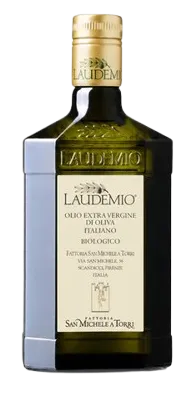
Bottle of Laudemio extra virgin olive oil
Meet Laudemio.

One estate. Early harvest. Uncompromising quality

615 mg/kgPolyphenolsLaboratory measured (Harvest 2025)
0.17%AcidityExceptionally low
EarlyHarvestQuality prioritized over volume
16+International medalsAward-winning worldwide
100%Organic · Single estateFrom olive tree to bottle
ACCREDIA-certified analysisAnalysis from harvest 2025-2026, verifying purity, polyphenols and ultra-low acidity.
View the certificate →
Explore the range